…as an a cappella Celtic crying song performed by a bunch of grumpy Irishmen.
I swear it’s much less of a stretch than it sounds (certainly less of a stretch than playing “Royals” by Lorde on Irish Bouzouki).
I write (and design) reports, guides, articles, and (best-selling) books for brands, businesses, and executives
…as an a cappella Celtic crying song performed by a bunch of grumpy Irishmen.
I swear it’s much less of a stretch than it sounds (certainly less of a stretch than playing “Royals” by Lorde on Irish Bouzouki).

Admit it: when you first heard “Royals” by Lorde you thought, “Wow. Catchy tune, BUT I really wish someone would play it on the Irish bouzouki.”
Your dream come true:

Ah, yes. The animated GIF. It’s the perfect medium for giving your already caffeine-addled brain a bit more stimulation, for adding some excitement to stale company HipChat conversations, and for giving your emails a bit of flair (15 pieces minimum). << And yes, that will be the only awkward Office Space reference I make in this post.
Instead of turning to Reddit, Señor Gif, or a Tumblr page the next time you’re in the market for an amazing animated GIF, why not create one yourself? As you’ll soon discover, the process is quite simple…provided you’re a musician and have access to a time machine.
And there you have it, five simple steps for creating an amazing animated GIF. Of course, you could skip steps one through three and simply upload a video you’ve taken yourself. (But I highly recommend the time machine route.) Until next time…Creativity is contagious. Pass it on.
*In the eyes of your mom.
Watching Breaking Bad, listening to Van Morrison radio on Spotify, reading the latest Clive Cussler novel (he’s the king of Indiana Jones-esque historical fiction/adventure, in case you were wondering), perusing a MarketingProfs or Content Marketing Institute post, eating buffalo chicken nachos at the Irish pub down the street…these are all examples of content consumption.
 Hold up. Buffalo chicken nachos? Content? But of course. Someone cooked the chicken and chopped the jalapenos and combined those ingredients to produce something with tremendous value. Spicy, delicious value. As consumers, we stare in awe at the glistening cheese, we smell the fiery buffalo sauce, we hear the tortilla chips crack and crunch, and we feel the greasy goodness on our fingertips.
Oh yeah, and we eat them. And they’re flippin’ tasty.
Alright, back on track. The point I’m trying to illustrate here is that it’s easy to get addicted to consuming content. And for good reason: There is a ton of content out there. You could easily fill out several lifetimes trying to consume all of the content that’s been created by your favorite authors, musicians, podcasters, chefs, etc. Don’t get me wrong: Consuming content is a good thing. It teaches us, it entertains us, it inspires us. But if we dedicate ALL of our free time to consuming, how are we supposed to get good at creating?
By cutting consumption and increasing production, we can all become more efficient and prolific content creators. How many of us spend between 75 percent and 100 percent of our free time consuming? We’re watching YouTube clips, we’re listening to music, we’re ordering pizza, we’re buying a clock made out of driftwood on Etsy. Why aren’t we recording our own videos, or making our own music, or baking pizza from scratch, or learning new skills so we can complete fun projects?
 Sit Down and Whittle Some
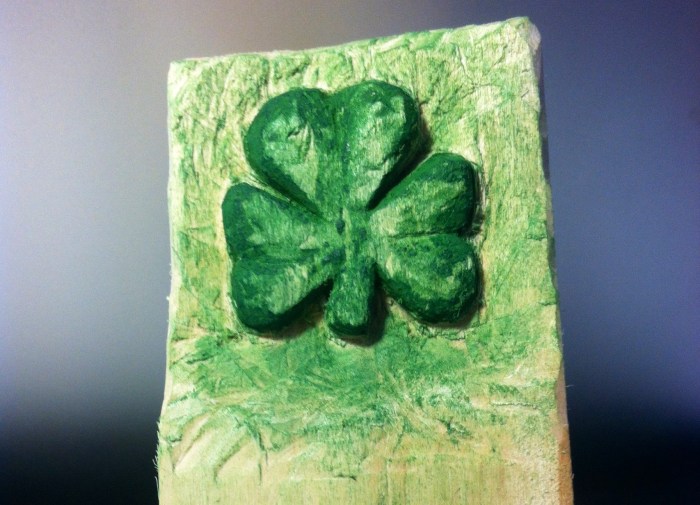
Worried that my brain was slowly eroding into mush, I decided to make a conscious effort to tip the scales…to create more than I consume. In addition to devoting more time to the creative activities I know best (playing music, writing, cooking), I also decided it was important to learn something new: I wanted to add a new category or channel to my creative repertoire. So, one Saturday morning I walked down to the hardware store, bought some woodcarving knives, bought a few blocks of wood, and whittled me something fierce. (And by “whittle me something fierce” I mean I Googled how to do basic relief carving and then carved a shamrock.)
I learned a lot that weekend. For example, I learned that woodcarving is a very precise art that requires extreme concentration and a very, very steady hand. This ties into another lesson I learned: woodcarving knives are sharp. Really sharp.
The finished product isn’t perfect, but that doesn’t matter. I didn’t carve my shamrock to to sell it, or to have it judged by a panel of art critics. I carved it so I could enjoy the process of carving it.
Now, if you’ll excuse me, it’s time to make some buffalo chicken nachos.

 You’ll be on a dock. The wood creaking beneath your flip-flopped feet. Lake water lapping against the shore. Campfire smoke in your lungs.
A ring of chairs: plastic, metal, Adirondack. Faces peeking out through the darkness. An old face. A young face. A face you see often. A face you haven’t seen for years. You’ll strum the rusty strings of a borrowed guitar.
Each song will awaken a memory. A stubbed toe. A backyard football game. A friend’s treehouse. A bookstore. A car crash.
You’ll pull a fresh beer from the cooler and continue leading the choir. Beatles. Van Morrison. An Irish folk song from centuries ago. Afro-Man. Tupac. Wait, what? It doesn’t matter. It’s all part of the drunken symphony.
Bob Marley’s “No Woman, No Cry.” Of course! But the spontaneous round singing that will erupt toward the end of the oft-sung song? An unexpected harmonic delight.
Some will belt the chorus, some will call out, “Hey, little sister, don’t shed no tears,” while others will reassure the group with, “Everything is gonna be all right.” It will all blend together seamlessly. A perfectly knitted moment.
Midnight will roll lazily by. The campfire embers will hiss with fatigue. You’ll hand the guitar back to its owner.
“Back in a sec,” you’ll say to the choir.
But then you’ll secretly make your way up to the house, hand-in-hand with a familiar face.


With St. Patrick’s Day fast approaching, playlists will soon be filling up with “diddly-i-o’s,” “mush-a ring dum-a do dum-a da’s,” and “no-nay-never no more’s.” And while it’s easy for even the most musically illiterate person to hear a Dubliners’, Clancy Brothers’, Chieftains’, or Pogues’ song and say definitively, “THAT’s Celtic music!” – getting that person to explain WHY it’s Celtic is a totally different story.
About a year ago, I sought to explain those distinctive aspects of Celtic music that make it so…errrr, “Celtic-sounding.” In addition to using several online resources, I found the textbook Focus: Irish Traditional Music by Sean Williams (available in the Kindle Store) incredibly helpful. My research complete, I presented my findings to my office in one of our weekly “Lunch & Learn” presentations.
Sláinte! (Cheers!)
My “Whiskey in the Jar” intro…full-length song coming soon!


“If you don’t have time to read, you don’t have the time (or the tools) to write. Simple as that.”
–Stephen King
 Want to know how content can help businesses succeed and how content creation/content marketing fits into the broader context of inbound marketing? Check out:
and/or
Ready to learn about content strategy, creating a content schedule/calendar, and best practices for producing specific types of content, such as blogs, webinars, white papers, and podcasts? I highly recommend:
Want to convince your boss that giving valuable content away for free is “totally groovy, man”? Go with:

Struggling to find that creative spark? Trying to build a pipeline of ideas for blog posts and other content? Tired of books that use too much marketing jargon? Try wrapping your brain around:
and/or
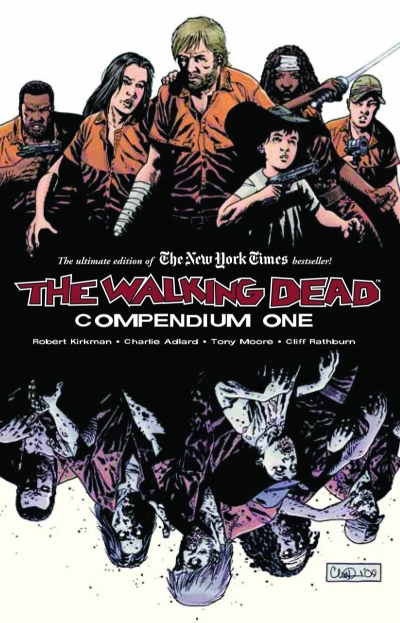
Ready to take a break from “business” and read something just for funsies? (Also, are you upset by the deplorable lack of zombies in the above-mentioned books?) Sink your teeth into:
Further reading:
Check out the Content Marketing Institute’s list of “Five Content Marketing Books You Need to Read.”
Know of other books that would be helpful for content creators? Leave a comment below!
 Erik Devaney